AREALISM (artificial-realism)
AREALISM (artificial-realism) is an ongoing project initiated from my practice working with short moving image artworks that engages with the written word, its relationship with the moving image and its development with the use of emerging creative technologies. In AREALISM there exists a methodology situated in a studio based research environment that explores how an AI video creator will interpret, in the form of a series of short silent video works, lines of original writing used as brief prompts without direct instructions.
This working collaboration with AI, a visualisation of the written word with an AI video, has now developed into a series of standalone silent moving image works or scenes with an AI generated cast in an AI interpreted visual narrative. The written text used in this work has been taken from a revised abstraction of one of my own previously published written works: ‘I heard him speak another language’, a surreal cut-up exploring contexts of the human condition, cultural shifts, demographics and the impact of advertising and public access to IT/ICT.
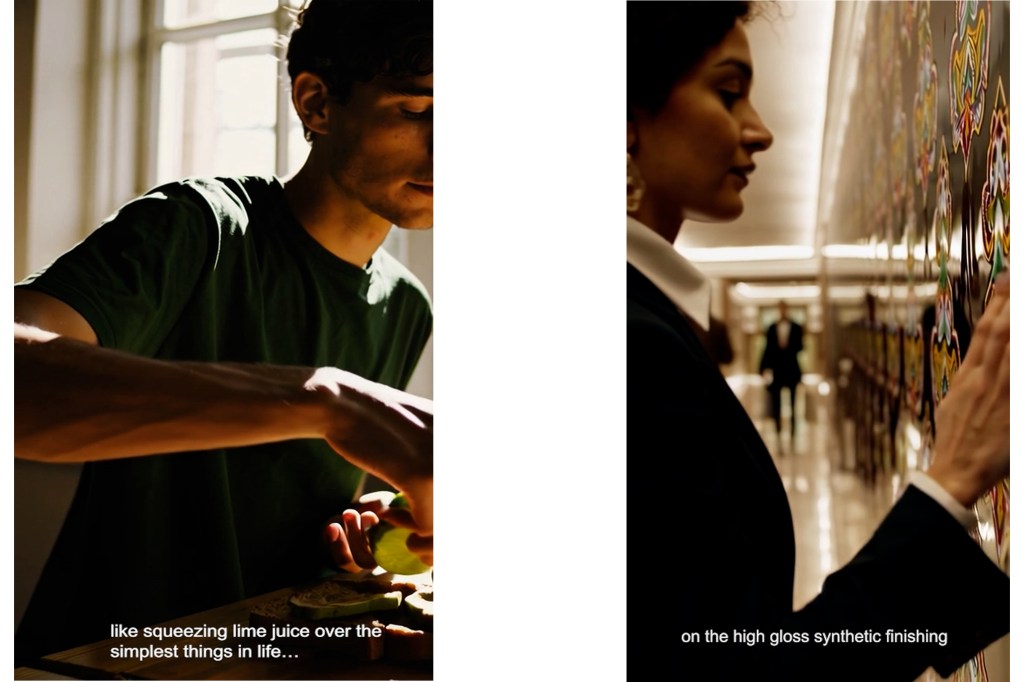
It is important to remember that in a creative context, AI uses logic, analysing patterns of data and algorithms when competing with itself, to excel in accuracy in its attempts at human mimicking as its objective and its output. But that it can’t experience the human condition, subjectivity or make the leaps of creative innovation that human creatives can and will still be capable of, even with the introduction of AI symbiosis.
As an ongoing critical observation, I feel that artists’ use of AI in the creation of new work is justifiable as a form of readymade, with developing artist approaches, new emerging aesthetics, developing narrative structures and representation in the arena of storytelling, all of which are discovered and are unique when working in collaboration with AI.
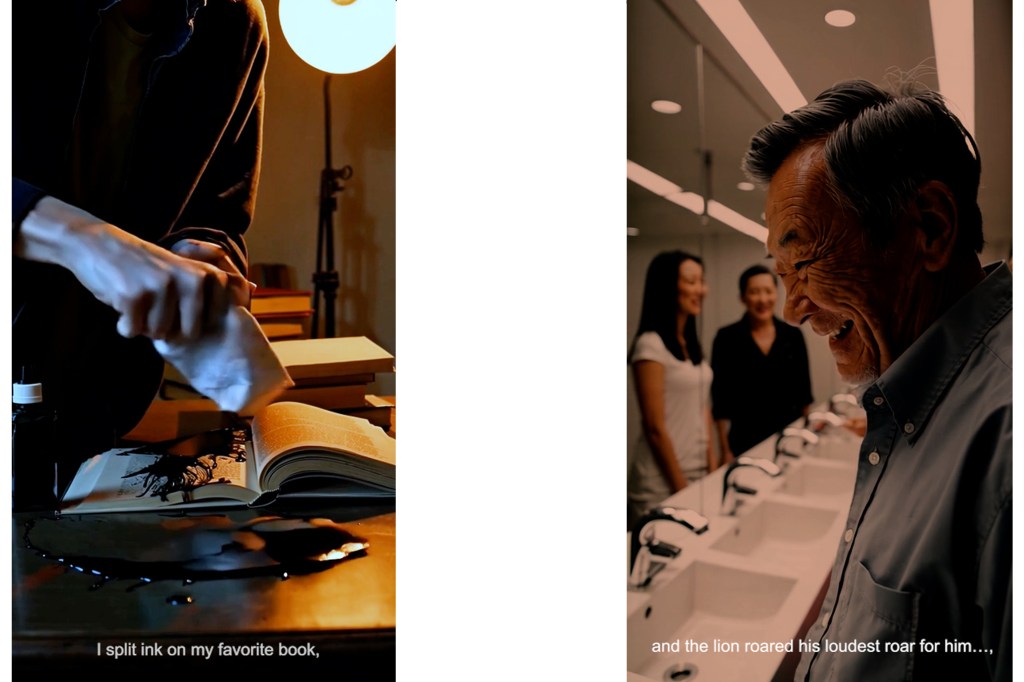
AREALISM and its realisation as an ongoing project is conceived from the idea, the original conception, the input, an abstract conceptualisation of moments of human experience interpreted by AI as short silent video works. The art is in the process as the prompted AI generates the artificial scene and directs an artificial cast of diverse protagonists through a transition of scenes and situations in the ‘acting out’ of what it visually interprets as the conceptual reality. Although artificial, there is a remarkable realism of our reality in the representation of the silent existences portrayed in the video works that we can still relate to and empathetically embrace.
Gary James Williams 2025
 Gary James Williams